Translation in 2026 Is Not Just About Language:
|
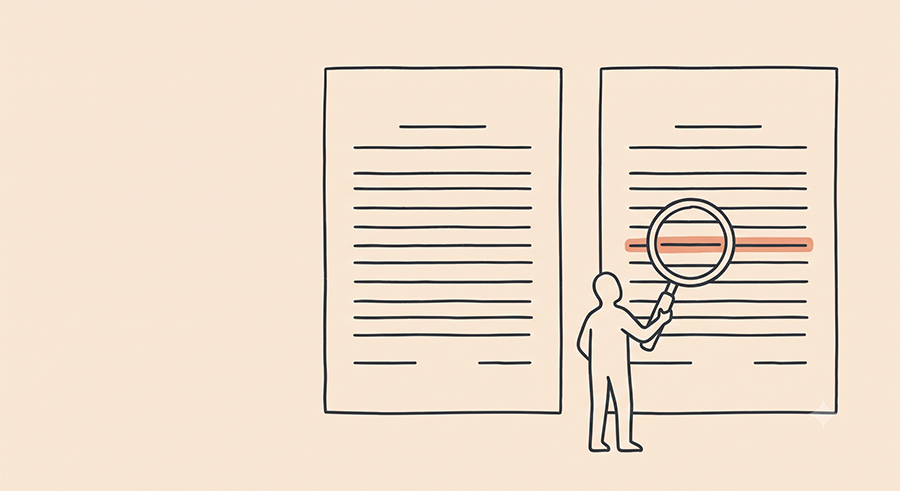
THE RISKS HAVE CHANGED
- AI and Data Risks: AI-powered translation introduces a new category of risk that did not exist five years ago. Data confidentiality is the most obvious concern: when your content passes through a cloud-based AI engine, where does it go? Who can access it? Is it used to train future models?
Beyond confidentiality, there are quality risks specific to AI: hallucinations (the AI invents information that was not in the source), silent errors (the translation looks fluent but conveys the wrong meaning), model instability (the same input produces different outputs on different days), and domain misalignment (the AI was trained on general text but is being used for specialised content)
Without governance, these risks compound silently. The translated manual looks professional. The safety instruction reads smoothly. But the meaning has shifted, and no one catches it until something goes wrong.
- Regulatory and Compliance Risks: If your documentation supports a product sold in regulated markets, translation is not just a language task: it is a compliance task. A mistranslated safety data sheet, an inaccurate IFU (instructions for use), or a non-compliant CE declaration can trigger recalls, fines, or liability.
Cross-jurisdictional work adds another layer. A manual translated for the Turkish market may need to comply with both EU and Turkish regulatory frameworks. The translator needs to understand not just the language, but the regulatory intent behind the source text.
These are not abstract obligations. Under the Medical Device Regulation (EU) 2017/745, instructions for use and labelling must be supplied in the language determined by each Member State where the device is placed on the market, which makes translation part of conformity rather than a downstream task. On the AI side, the EU AI Act's Article 50 transparency obligations apply from 2 August 2026, while the Digital Omnibus agreed in 2026 moved the high-risk regime for standalone Annex III systems to 2 December 2027 and for AI embedded in regulated products to 2 August 2028. The high-risk deadline moved; the transparency layer largely did not. For anyone buying translation, the practical consequence is the same either way: if AI touches your content, you need to know exactly where, and be able to demonstrate it.
|
WHAT RISK GOVERNANCE LOOKS LIKE IN PRACTICE
Risk governance in translation is not a theoretical framework. It is a set of practical decisions made at the start of every project:
|
First, content classification. Not all content carries the same risk. An internal email and a patient information leaflet require fundamentally different workflows. Classifying content by risk level determines the appropriate workflow: AI-assisted, human-only, or dual-review.
Second, AI controls. If AI is used, it should be used within a controlled environment: custom prompts, domain-specific training data, translation memory integration, and mandatory human review. The output should be traceable: you should be able to identify which segments were AI-generated and which were human-written.
Third, data handling. Confidential source documents should never pass through uncontrolled cloud services. The translation partner should be able to explain exactly where your data goes, how it is stored, and when it is deleted.
Fourth, reviewer qualification. The person reviewing the translation should have subject-matter expertise, not just language skills. A medical reviewer for medical content, a legal reviewer for contracts, an engineer for technical manuals.
|
CHOOSING A WORKFLOW
Risk governance in translation is not a theoretical framework. It is a set of practical decisions made at the start of every project: Choose the right workflow based on content risk, volume, and regulatory requirements.
|
The tier determines how the translation is produced. It does not change the governance applied to it. Classification, data handling, and reviewer qualification are constant across all three.
Not sure which workflow fits? Tell us about your content and we will recommend one.
Link: /en/quote
|
WHY THIS MATTERS FOR BUYERS
Risk governance in translation is not a theoretical framework. It is a set of practical decisions made at the start of every project:
|
If you are evaluating translation providers in 2026, ask about risk governance, not just quality. Ask how they classify content. Ask how they control AI output. Ask where your data goes. Ask who reviews the final deliverable and what qualifies them to do so.
The agencies that can answer these questions clearly are the ones that have built their workflows around accountability, not just efficiency.
FREQUENTLY ASKED QUESTIONS
How should content be classified for translation risk? By consequence of error, not by document type. An internal memo and a patient information leaflet may be the same length and format, but a mistranslation in the second one is a safety event. Classification determines whether the workflow is AI-assisted, human-only, or dual-review.
Can AI be used for regulated content? Yes, within controls. That means a closed environment, translation memory and glossary enforcement, segment-level traceability of what was machine-generated, and mandatory review by a qualified subject-matter specialist. Uncontrolled AI on regulated content is not a cost decision, it is a liability decision.
Where does my content go when it is translated? It should be a question your provider can answer precisely: which systems process it, where it is stored, who has access, whether it is retained for training, and when it is deleted. A provider who cannot answer this has not designed for it.
What qualifies someone to review a translation? Domain expertise in addition to language competence. Under ISO 17100, revision is performed by a second qualified linguist; for regulated content, that reviewer should also understand the regulatory intent behind the source text.
HOW WE APPROACH IT
At Alafranga, we approach every project through structured risk awareness. We classify content by risk level before selecting a workflow. We use AI within controlled environments, applying custom prompts, TM integration, and glossary enforcement, with mandatory human review on every deliverable. We do not send client data through uncontrolled cloud services. And we assign reviewers based on subject-matter expertise, not availability.
This is not a premium tier. It is how we work on every project, because in regulated industries there is no such thing as low-risk translation.
WE OFFER SPECIALIST TRANSLATIONS
- Technical translations: energy, manufacturing, machinery, products, devices and tools, electric and electronic systems, automation, agrotech, computers, safety, quality, compliance.
- Legal translations: contracts, standards, and laws.
- Medical translations: regulated medical content.
- Web, app, game: websites, software, games.
- Scripts and subtitles: media, AV, and timed-text localization.