|
Customer Support In regulated industries — such as medical, legal, financial, industrial, and public-sector environments — accuracy in translation is not merely a quality expectation. It is a compliance requirement. While structured workflows and multi-layered quality assurance significantly reduce risk, complex projects can still present unforeseen issues. What distinguishes a mature language service provider is not the claim of perfection, but the disciplined management of responsibility when corrective action is required. |

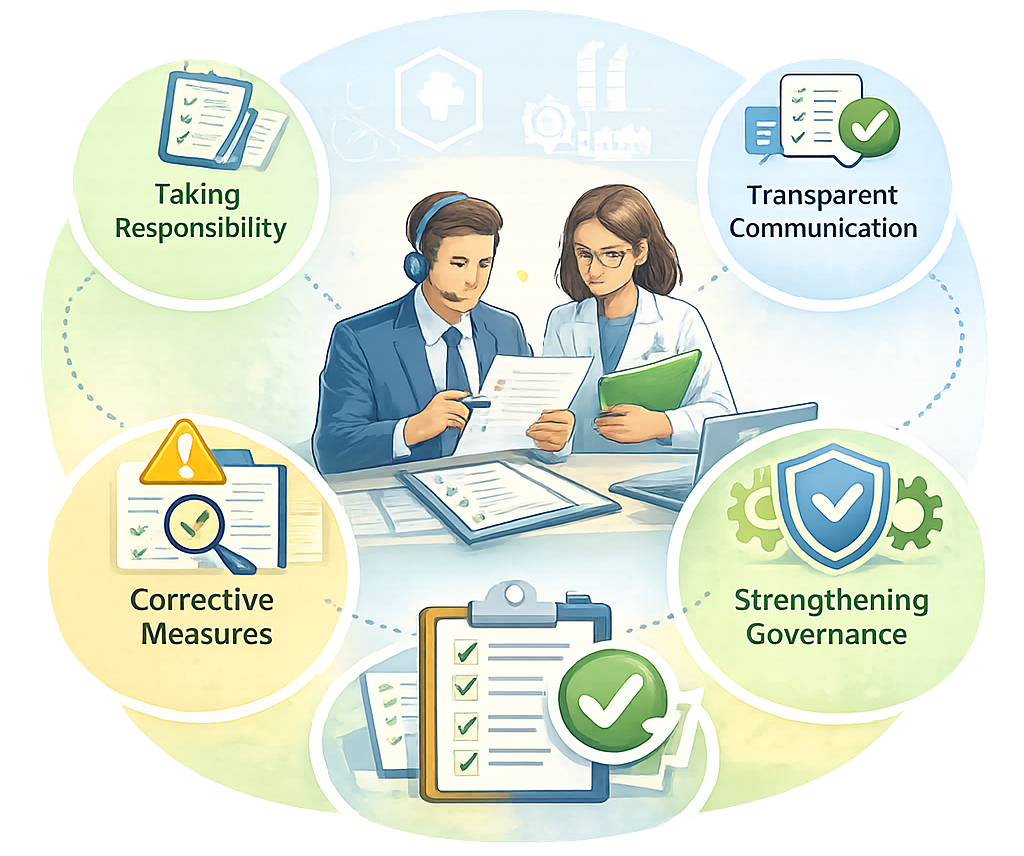
▮When an Issue Is Identified
An issue may involve terminology misalignment, regulatory phrasing sensitivity, formatting inconsistencies in controlled documents, or version-control discrepancies.
In regulated contexts, even minor deviations can carry reputational or compliance implications. When such an issue is identified, the response must be immediate, structured, and accountable.
Enterprise clients expect resolution — not justification.
▮Taking Formal Responsibility
Professional accountability begins with transparent acknowledgment.
In regulated environments, this includes:
- Clear identification of the affected segments
- Root-cause analysis
- Internal quality review
- Defined corrective action plan
A prompt and structured response demonstrates governance maturity and reinforces operational reliability.
Corrective actions resulting from provider-side errors must be handled without additional cost to the client. This is not a courtesy — it is a professional standard.